
Starting a business feels powerful in the beginning. Ideas are fresh. Motivation is high. You post a few things online and expect momentum.
Then… silence.
This is the phase where most founders start doubting their product, their pricing, even themselves. And this is exactly where real marketing advice for new business owners becomes critical. Because early-stage marketing is not about doing more. It’s about doing the right few things properly.
Let’s structure this clearly.
Define Your Target Audience First
Most new businesses make this mistake immediately.
They create social media pages. They design logos. They post content. And only later they ask, “Wait… who exactly is this for?”
That order is backwards.
A strong new business marketing strategy always starts with clarity about the audience. Not broad categories like “small businesses” or “students.” Specific segments. For example:
- Freelance designers struggling to get consistent clients
- Gym trainers trying to move online
- Local bakery owners wanting more weekday foot traffic
When you clearly define your target audience, three things improve instantly:
- Messaging becomes sharper
- Content becomes easier to create
- Conversion rates increase
Marketing becomes simpler when you know exactly who you are speaking to.
Strengthen Your Offer Before Spending on Marketing
Here’s something important: marketing cannot fix a weak offer.
If people are not interested, it is often not a traffic problem. It is an offer problem.
Ask yourself:
- Is the problem urgent?
- Is the outcome specific?
- Is the result measurable?
- Is the benefit clearly communicated?
For example, “Business Coaching Program” is vague.
But “Help New Coaches Get 5 Paying Clients in 60 Days” is specific.
Strong offers reduce resistance. Weak offers require constant persuasion.
This is why marketing tips for startups should always begin with refining the value proposition before focusing on promotion channels.
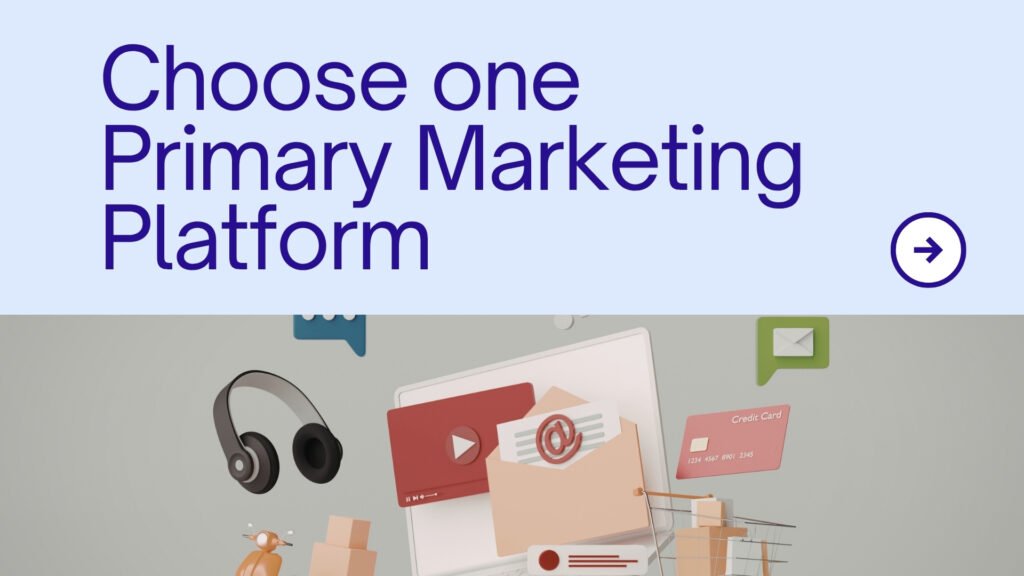
Choose One Primary Marketing Channel
Early-stage founders often try everything at once:
Instagram, LinkedIn, YouTube, Facebook ads, email marketing, SEO, cold outreach…
This creates scattered effort.
Instead, pick one main channel based on where your audience already spends time.
If your audience is professionals, LinkedIn may work better.
If visual content matters, Instagram could be effective.
If long-term search traffic matters, focus on content marketing and SEO.
When you go deep instead of wide:
- Your brand becomes recognizable
- Your message becomes consistent
- Your audience builds trust
Consistency beats intensity.
Use Content Marketing for Long-Term Growth
Content marketing for new businesses is slow but powerful.
When you create blog posts targeting specific keywords like “marketing advice for new business” or “how to market a startup,” you build searchable assets. These assets continue bringing traffic months after publishing.
Effective content marketing includes
- Answering real customer questions
- Creating detailed guides
- Publishing case studies
- Sharing practical insights
Unlike paid ads, content compounds over time. It builds authority, improves SEO rankings, and positions you as a trusted source in your niche.
This approach supports sustainable marketing for new business growth instead of short-term spikes.
Test Organic Strategies Before Running Paid Ads
Paid advertising can accelerate growth. But only if the foundation is strong.
Before investing in ads, ensure:
- Your messaging is validated
- You have closed clients organically
- Your conversion rate is understood
- Your customer acquisition cost is estimated
Running ads without these basics often results in wasted budget.
Organic marketing gives feedback. Paid marketing amplifies what already works.
Track the Metrics That Actually Matter
Many new entrepreneurs focus on vanity metrics like followers and likes.
These numbers look good but do not guarantee revenue.
Instead, track:
- Leads generated per week
- Conversion rate
- Customer acquisition cost (CAC)
- Customer lifetime value (LTV)
Understanding these metrics allows smarter decisions and better resource allocation.
Marketing without data becomes guesswork.
Stay Consistent Longer Than Your Competition
Most new businesses quit marketing too early.
Results often take 3–6 months to show, especially with content and SEO strategies. Growth compounds. Early traction may feel slow, but consistent effort creates long-term stability.
Patience is part of strategy.
If you maintain:
- A defined audience
- A strong offer
- One focused channel
- Measured performance
You build a system instead of chasing trends.
Final Thoughts on Marketing Advice for New Business Owners
Effective marketing for new business owners is not about hacks or viral tactics.
It is about clarity, focus, and disciplined execution.
Define your audience. Refine your offer. Choose your channel. Create value consistently. Track performance.
The businesses that grow are not always the most creative.
They are often the most consistent.